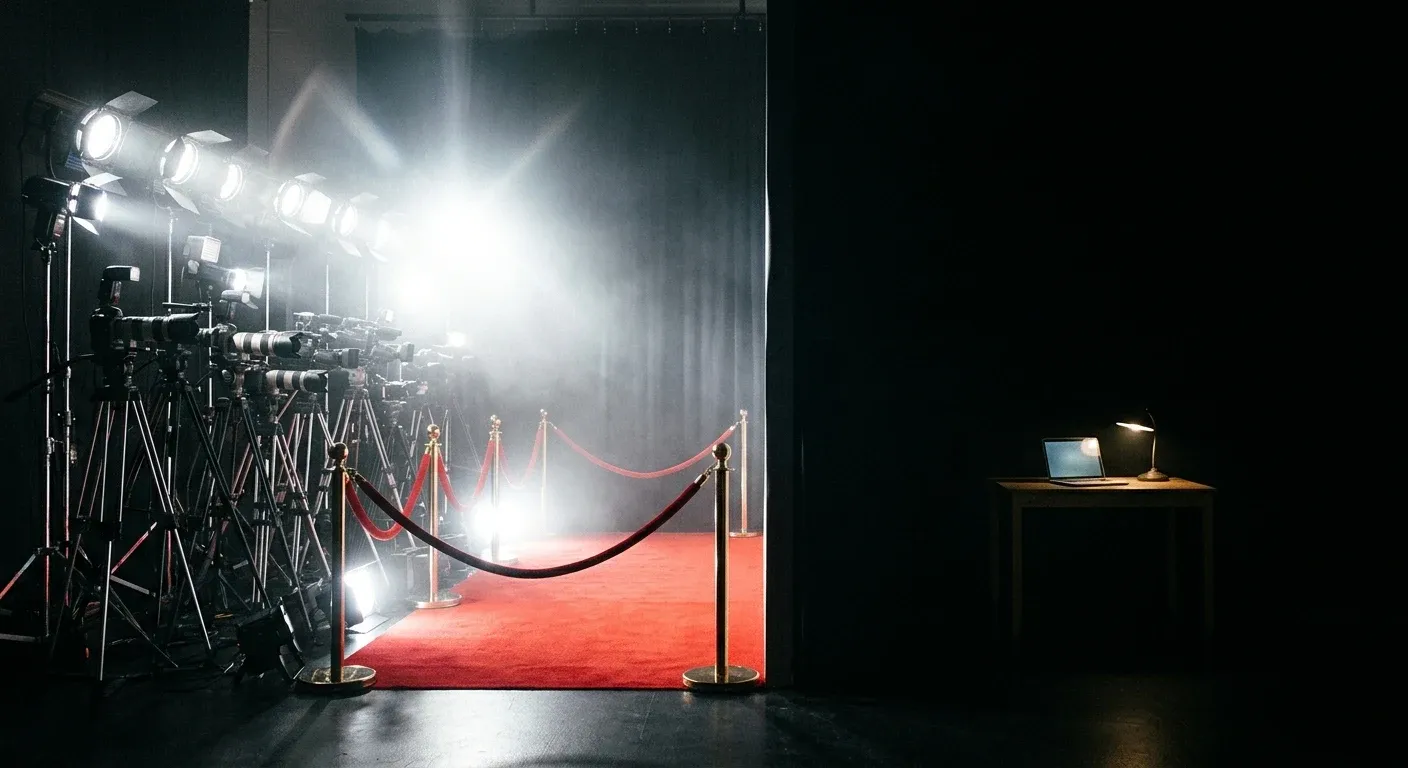
The Guardian dropped a big feature on "directors embracing AI filmmaking" and I'll give them this: it's well-reported. Well-sourced. Well-photographed. Also, it's a story about people who already had leverage before AI showed up.
Promise: bankrolled by Google, Disney, and a lineup of Silicon Valley VCs, shooting a few blocks from Sony's actual lot. Obsidian: living inside Ron Howard and Brian Grazer's production company, because nothing says "scrappy disruption" like borrowing Ron Howard's building. Then there's Kavan "the Kid" Cardoza — the piece's designated outsider, and credit where it's due, he actually did start from a spare bedroom with nothing. But he's not making his case study case anymore. He's got a platform deal with Magnific AI and 28 million YouTube views. That's not "nothing" now. That's leverage most people will never touch.
Two studios that started with capital, and one guy who started with none and ended up with scale. Not one of them is still standing where most of us actually are: no VC, no legacy studio address, no viral-sized audience, just client work and a bank account that depends on getting the next invoice paid.
Here's who's actually doing this
I started ARP Visuals in November 2024, in Tampa Bay. No VC. No platform deal. No Ron Howard on speed dial. Since then: paid brand and commercial work for real clients, a speaking invite from the TigerTail Asian Film Festival, and a Best Videographer win in Creative Loafing's 2025 Best of the Bay — the only AI filmmaker on that entire list. That's what this tier of the industry looks like when it's working: unglamorous, regional, and profitable without anyone's blessing.
Why the coverage keeps stopping at the Hollywood city limits
I don't think anyone's conspiring here. I think it's just easier to write the story where the disruption stays inside a building everyone already recognizes — big studios, big names, big budgets, the usual cast of worried directors and worried unions. Nolan's uneasy, del Toro's uneasy, SAG-AFTRA's uneasy — got it, that's the whole industry-insider drama, wrapped with a bow.
What that framing conveniently skips: the disruption already happened, and it happened to people this article never called. It's not "will AI reshape how $60 million movies get financed." It's "a person with a laptop can now run a production company that used to require a crew, a budget, and somebody's cousin in the industry to get a meeting." That's not a 2030 projection. That's my Tuesday.
The line they printed and didn't follow
Producer Joanna Popper is quoted in the piece worrying about "five tech companies suck[ing] all of the financial gain out of the industry." Correct instinct — aimed at exactly the studios the article spent most of its word count fawning over. But the regional, one-person-shop version of this technology is the one where the money doesn't funnel upward to a VC term sheet or a platform's cut. It stays with the person who did the work. That's the actual hopeful case study buried in this trend, and it's not in the article.
Where this actually leads
Every studio like mine operating outside a major market is proof this stopped being a Hollywood story a while ago. It's a small business story. The question worth asking isn't "how does AI change the pipeline" — it's "who gets to have a pipeline now." Trade press keeps missing it because they keep interviewing the same handful of names with the same handful of backers.
I'll keep answering that question with client work. Somebody just needed to say the quiet part: you can't cover a disruption while only talking to the people it was never going to disrupt.
