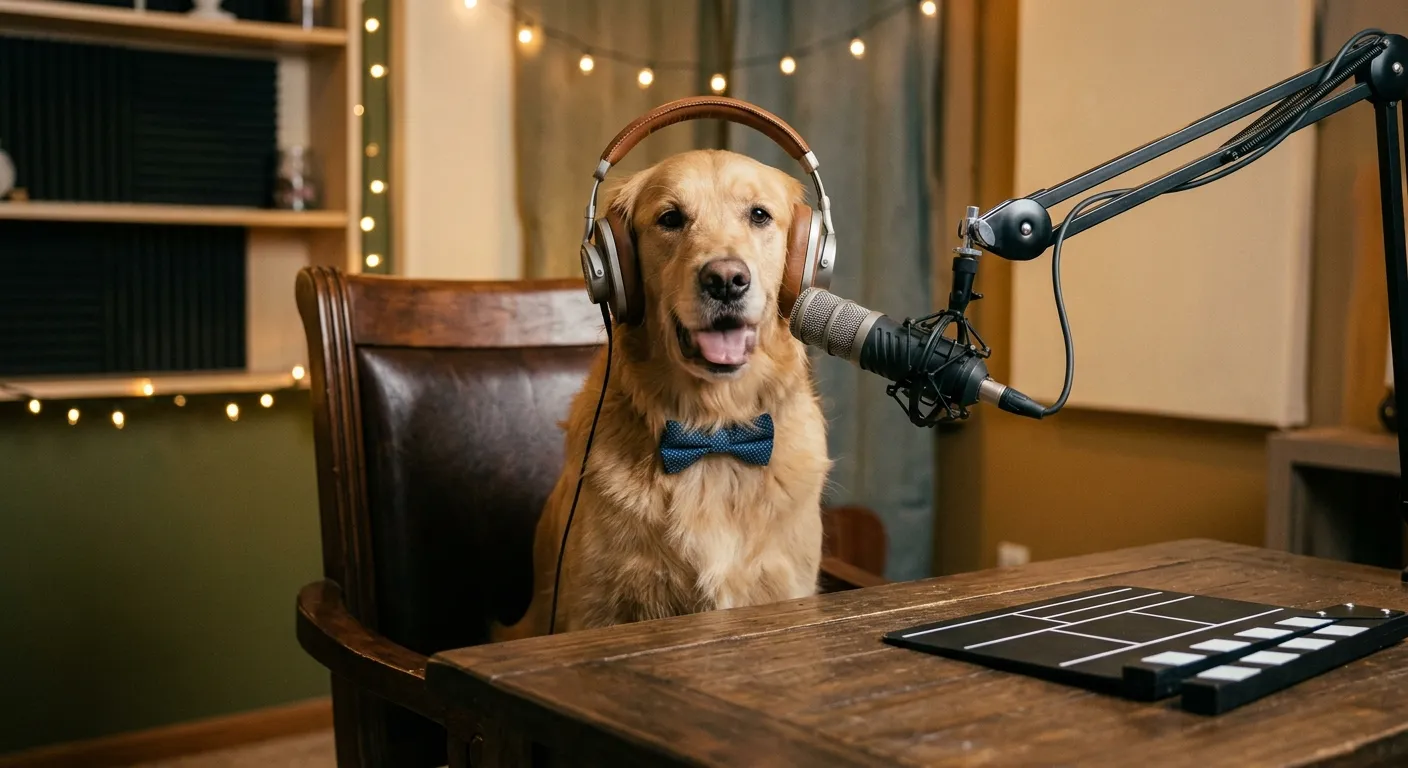
Warner Bros.' AI-generated ad for The End of Oak Street — the one where Anne Hathaway and Ewan McGregor's dog Starbuck sits down with the animated hosts of "The Dogbone Podcast" — has kicked up the kind of backlash you'd expect: comments across Instagram, X, Threads, and TikTok calling it cheap, off-putting, and a reason to skip the movie entirely. DogPack co-founder Dov Punski defended the spot, telling Business Insider, "People don't like to feel like they're being tricked … This is obviously not real. We're not trying to trick anyone, we're just trying to give people entertainment."
He's right about that part, and it's worth saying plainly before getting to what went wrong. Nobody watching a talking-dog ad thinks the dog is actually talking. That was never the objection, and treating "people know it's fake" as a defense of the execution is answering a complaint nobody made.
The real problem was who they hired to make it
Warner Bros. wanted tongue-in-cheek. Fine. But the studio or marketing team behind this apparently found a YouTube channel doing animated dog-podcast content, liked what they saw, and hired that team without asking whether the same aesthetic would survive being blown up into a studio movie ad. That's the actual failure, and it's a casting problem, not an AI problem. Anyone can run a talking-animal channel on YouTube now — the bar to make that content is low. The bar to make it work as paid promotion for a theatrical release is a lot higher, and this crew wasn't over it.
The tell was in the first few seconds: the lips didn't move naturally. Compared to what the better lip-sync tools can do now, it looked like corner-cutting — like whoever assembled this reached for a cheaper generator instead of investing in something that could actually sell the illusion. And the choice to render the dogs photorealistically made that gap worse, not better. If you're going to render an animal realistically, the mouth movement has to hold up under that same realism, or the mismatch is the only thing anyone notices. Go stylized and cartoonish, and viewers forgive a lot more. Go realistic and get the lip sync wrong, and you've built a spot where the flaw is the whole story. If the team couldn't nail realistic, they shouldn't have attempted realistic — full stop.
Where the blame actually sits
I don't know the actual internal process at Warner Bros. or DogPack — who greenlit this, who signed off, or what the production timeline looked like. But this has the shape of a familiar marketing pattern: someone finds a cool piece of content, gets excited, pitches it internally, and the room signs off before anyone stress-tests whether it'll hold up at studio scale. Once money's committed, the incentive tilts toward shipping it rather than pausing to fix it. I'm inferring that's what happened here, not reporting it.
What I can say from watching the clip itself is that the final cut didn't do the material any favors — the pacing and the cutscenes left the seams visible rather than smoothing over them, so viewers ended up studying what was wrong with it instead of just receiving it as a fun promo. Whether that's an editing choice, a budget constraint, or just a rough vendor deliverable that nobody pushed back on, I can't say.
So: a vendor mismatch for the format, and — as best I can tell without inside knowledge — a greenlight process that likely prioritized enthusiasm over scrutiny. AI itself isn't the problem in either case.
The backlash isn't really about this ad
The article's other point lands too — some of this reaction is AI backlash as territory-protection, from people in creative fields who are going to push back hard on anything AI-adjacent regardless of execution quality. That's real, and it's not going away. But it doesn't let Warner Bros. off the hook here. A well-executed version of this exact concept — better lip sync, a less realistic dog, a tighter edit — would still have drawn some "AI ad" complaints. It wouldn't have drawn this level of pile-on, because the ad itself would have given critics less to point at.
That's the lesson for anyone doing this kind of work: the backlash risk from using AI in marketing is a fixed cost you're going to pay to some degree no matter what. The backlash risk from doing it badly is the part you actually control.