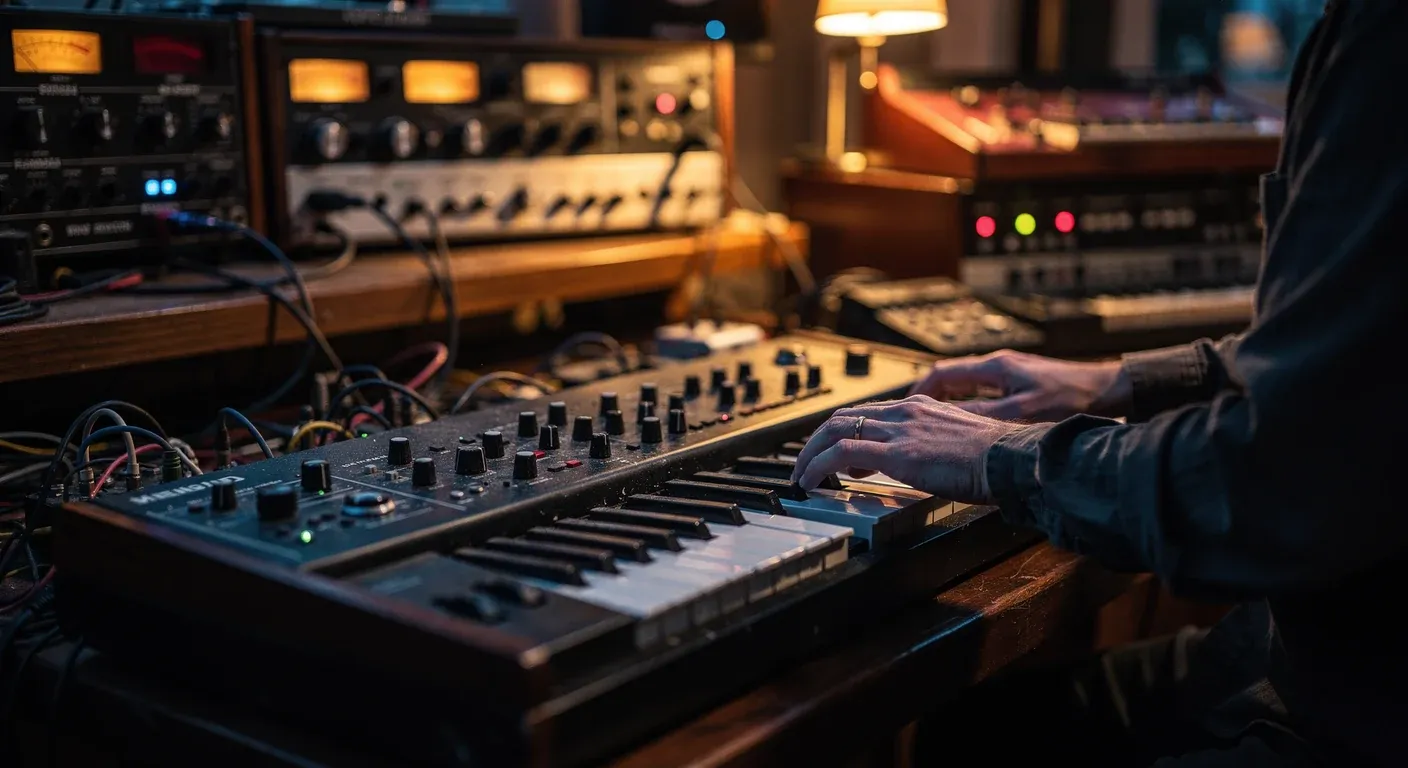
I've been playing keyboard and guitar since first grade. Studio time, mastering, actual radio play — I've paid the dues most of the "AI is killing music" crowd assume nobody who touches AI has paid. So when Max Harris, 26, EDM producer, says AI-generated music isn't art because true art requires someone trying to convey a feeling, I don't dismiss the standard. I meet it. And I want to know why he thinks I don't.
His argument, from the Verge piece making rounds this week: AI music is "a decoy art form." The people making it don't have anything meaningful to say. Fine. Name the standard. Real art conveys emotion. Somebody has to be feeling something and trying to get you to feel it too.
I agree with that standard completely. I just think Harris pointed the accusation at the wrong address.
Here's what actually happens before I touch a prompt.
I start with a life experience. Love and loss. Holding on, letting go. Something a listener has actually lived through, not something that sounded good in a pitch meeting. Then I build the narrative arc — where does this feeling start, where does it end, what's the shape of it. Only after that do I pick a genre, because the genre has to serve the arc. Deep house doesn't carry grief the way trip hop does — and picking between them isn't a coin flip, it's a decision I make on purpose.
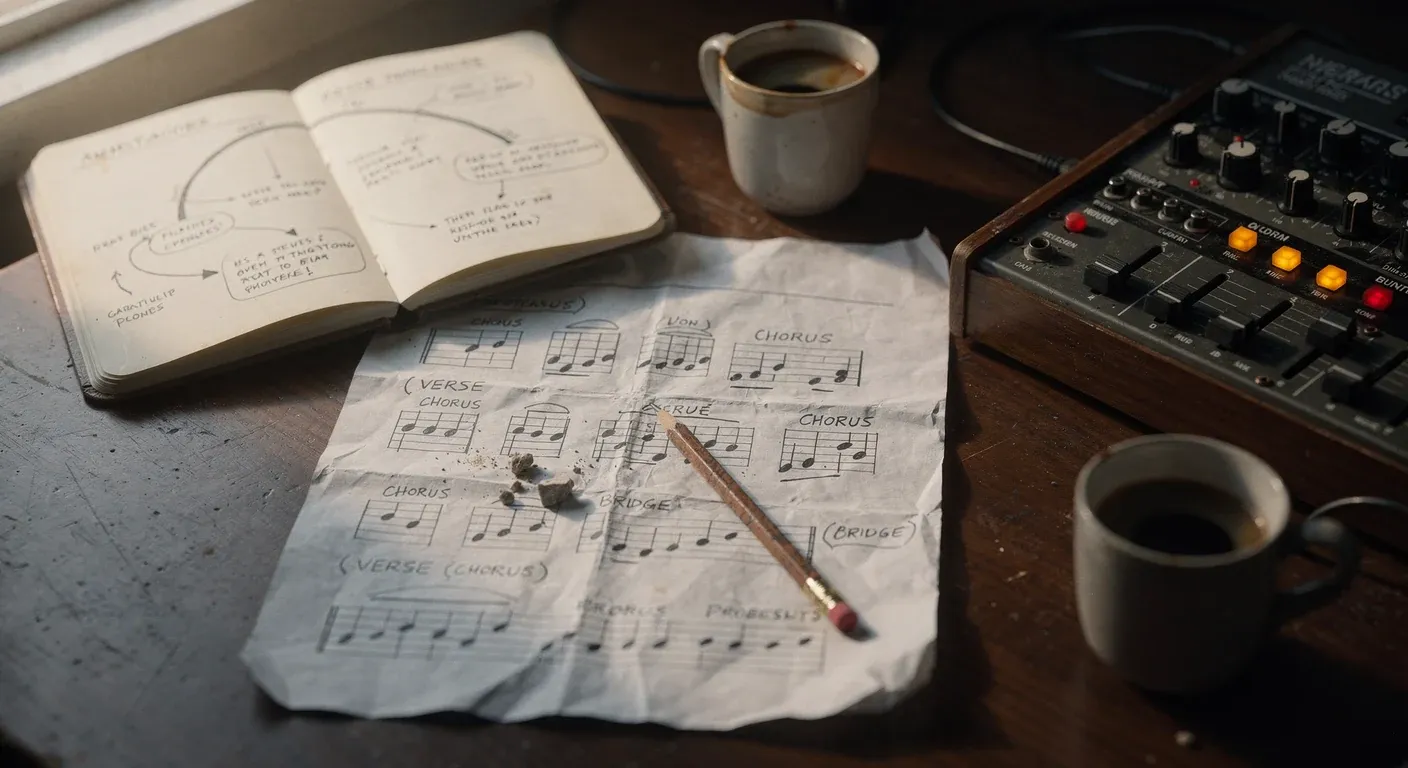
Then the lyrics, and I'll be honest about who I'm ripping off structurally — Robert Smith, Depeche Mode, artists who could turn a sentence sideways and still break your heart with it. Poetic phrasing over literal phrasing. If I get stuck, I've got a tool that asks me questions until the right words fall out. Notice what that tool isn't doing. It isn't feeling the loss for me. It's a mirror, not a ghost writer.
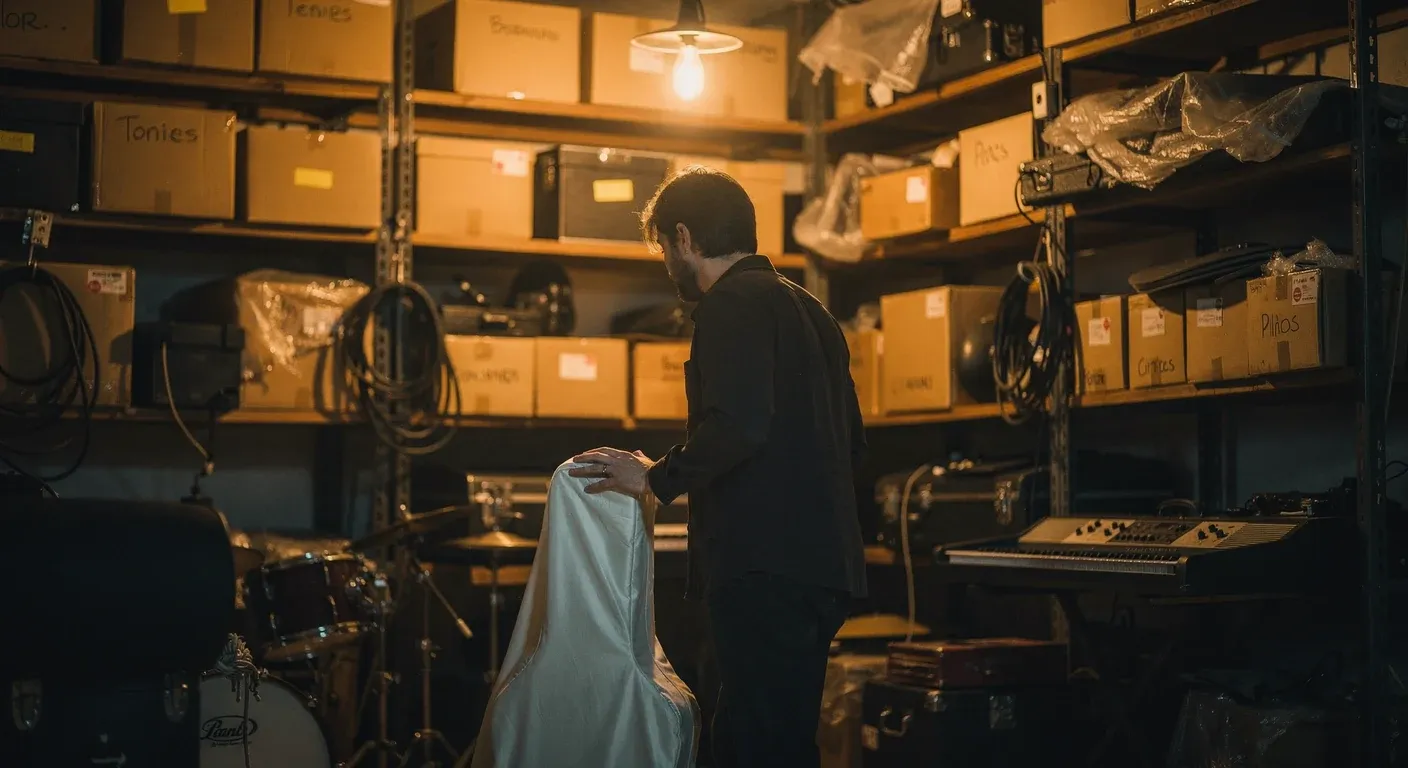
After that: pacing, BPM, chord progression — and chord progressions aren't decoration, they're the emotional engine. A minor seventh does something different to a room than a major triad, and picking between them isn't a coin flip, it's the whole point. Only once every one of those decisions is locked do I open the prompt window and start describing what I need — the grit of a JV-1080 pad, the punch of a 909 kick against an 808 sub. By the time AI enters the process, the song already exists. AI is just the studio I don't currently own, because my actual instruments are sitting in storage.
So ask yourself what Harris is actually measuring.
If his standard is "did a human feel something and try to make you feel it too," I clear that bar before I ever open the software. What he's actually measuring is which studio I used to record it. That's not a test of authenticity. That's a test of equipment ownership, dressed up as a philosophy.
And to be clear — I'm not defending the guy who types "write me a song about eating Doritos on the beach in Anna Maria Island, make it a dance tune" and uploads whatever comes out. That guy hasn't done the work. There's no narrative arc, no chosen chord progression, no lived experience behind it. He deserves every bit of the skepticism Harris is handing out. The difference between him and me isn't the tool. It's that I did the job the tool got credit for.
That's the actual fight worth having.
Not human versus machine. Authorship versus outsourcing. Harris is aiming at the wrong side of that line, and until he moves his aim, he's not protecting art. He's protecting the assumption that the studio makes the artist — which is the exact assumption every synth player, every sampler, every guy with a drum machine already had to fight through to get taken seriously. He'd have called them decoys too.
